
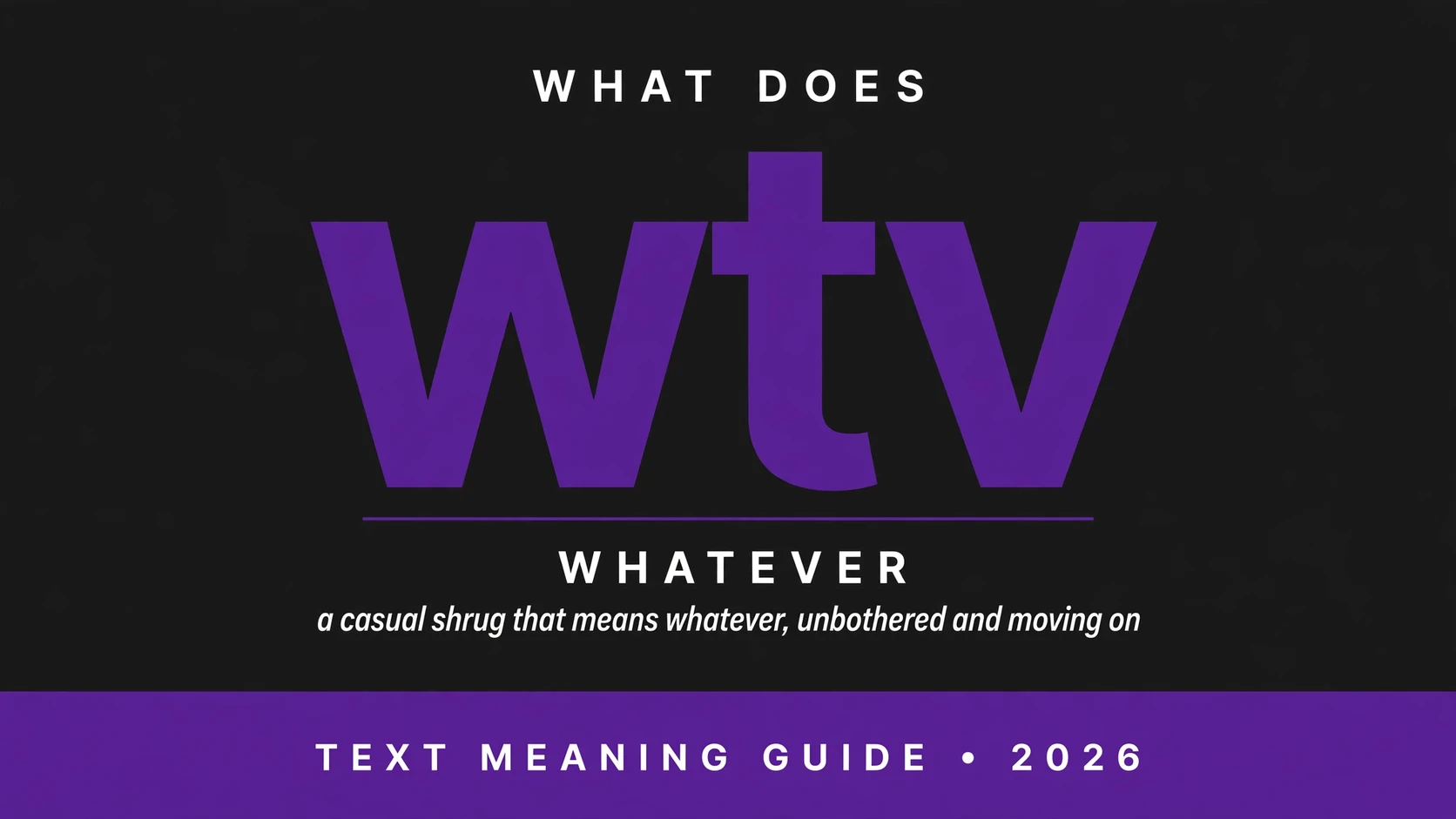
You have probably stared at a short reply and wondered what does wtv mean in text when the chat suddenly goes quiet. It looks tiny, but it can carry a shrug, a laugh, or a full brush off in three letters. The trick is reading the mood around it, not just the letters themselves.
Most of the time wtv simply means whatever, and your friend is waving the topic away without much feeling. Sometimes it is easygoing agreement, and sometimes it is pure dismissal. The punctuation, timing, and what came right before it tell you which version you got.
The Quick Shrug Decoded into Plain English
This breakdown gives you the core senses first. The right side shows what your friend probably meant underneath that short reply.
| How wtv lands | What it really signals |
|---|---|
| After a choice between food spots | I am fine with either, you pick |
| After you suggest a later time | That works, I am not fussy here |
| After a mild disagreement about a show | I am dropping this, not worth arguing |
| After a long unwanted explanation from you | Okay, noted, I am moving on now |
| With a laughing emoji after it | I am joking, not taking this seriously |
| With a period right after it | I am annoyed and closing this down |
| After a plan falls through today | Disappointing, but I will not stress it |
| All by itself, nothing else attached | No strong take, do what you want |
Group Chat Moments Where Wtv Keeps Things Moving
Group chats move fast, and nobody wants to slow the thread down. These exchanges show wtv keeping plans rolling without a long speech from anyone.
Jordan: wtv you guys want for pizza
Context: Jordan is hungry and fine with any topping tonight.
Priya: leave at seven or seven thirty
Context: Priya asks about timing while everyone gets ready.
Sam: wtv works, ready whenever you are
Context: Sam stays flexible and avoids a timing debate.
Leo: blue poster looks better tbh
Context: Leo shares his pick for their project board.
Maya: wtv leo, your taste is better
Context: Maya trusts Leo and lets him decide.
Chris: movie friday or saturday, vote now
Context: Chris tries to lock a night quickly.
Ana: saturday pls, friday i work late
Context: Ana gives a real preference for the group.
Zoe: wtv happens we figure food there
Context: Zoe calms the planning and keeps it easy.
How Tone Flips Wtv from Easygoing to Ice Cold
The same three letters can feel warm or frosty. Tone, timing, and punctuation do almost all of that work for you here.
| Clue in the chat | How to read that wtv |
|---|---|
| Sent fast with an emoji nearby | Light and casual, almost certainly not upset |
| Sent after a long pause, with period | Cool and distant, likely real irritation showing |
| Followed quickly by a new topic | A clean reset, already moved on now |
| Lowercase with no punctuation at all | Default shrug, relaxed and not deeply invested |
| Repeated twice in one short chat | Growing frustration, wants the subject closed now |
| Paired with sure or fine nearby | Often sarcastic, especially during tense exchanges today |
| Sent after you apologized to them | Forgiving and breezy, mistake already forgotten here |
| During a playful roast between friends | Teasing and affectionate, part of your joke |
Late Night Chats Where Wtv Says More than It Shows
Late night texts carry extra weight because everyone is tired. These sleepy exchanges show wtv doing quiet emotional work for both people texting.
Ben: you still mad about earlier tho
Context: Ben checks in after an awkward moment tonight.
Tara: wtv ben, we are good, stop overthinking
Context: Tara reassures him while teasing his worrying.
Ben: ok good, i kept replaying it
Context: Ben admits he felt anxious about it.
Noah: cant sleep, my brain wont stop
Context: Noah vents a little, hoping for company.
Lily: same, wtv lets talk till we drop
Context: Lily turns restlessness into a shared hangout.
Owen: did i sound weird earlier today
Context: Owen worries his joke landed wrong before.
Ella: no, wtv, nobody even noticed it
Context: Ella shuts down his spiral calmly.
Rosa: wtv, deleting that tired photo now
Context: Rosa laughs at herself before bed tonight.
What Does Wtv Mean in Text When Someone Is Dodging You
Sometimes wtv is really about avoiding a straight answer. This guide helps you spot the dodge without assuming the worst about your friend.
| Situation you are in | Likely dodge behind wtv |
|---|---|
| You asked for a clear answer | Your friend does not want commitment yet |
| You brought up next weekend plans | Your friend is keeping options open still |
| You asked about the recent argument | Feelings are raw, talking feels too heavy |
| You asked for help moving boxes | Your friend hopes someone else volunteers first |
| You shared unexpected news with them | Your friend needs time before reacting properly |
| You asked about money owed you | Awkwardness is talking, not real indifference here |
| You pressed for personal details today | Your friend wants privacy without a fuss |
| You suggested fixing your problem together | Your friend is not ready yet today |
Flirty, Friendly, and Just Plain Unbothered Wtv Replies
Not every wtv is a shutdown, and plenty feel warm. These chats show the softer side, where a shrug invites more conversation instead of ending it.
Alex: you looked cute in that photo
Context: Alex slips in a compliment this afternoon.
Samira: wtv alex, you say that always
Context: Samira plays cool while enjoying the attention.
Alex: because its true every single time
Context: Alex doubles down and keeps flirting playfully.
Dana: coffee before class tomorrow morning maybe
Context: Dana floats a simple, low key plan.
Milo: wtv, coffee or tea, im down
Context: Milo agrees easily and keeps it open.
Jess: finally beat your game score today
Context: Jess brags after weeks of trying hard.
Theo: wtv jess, rematch tonight then ok
Context: Theo acts unbothered while demanding another round.
Nina: wtv, you are fun to talk to
Context: Nina softens a sincere compliment with shrug.
Punctuation Tricks That Change Wtv in a Second
Punctuation is the volume knob for wtv in texts. Tiny marks can turn a chill reply cold, so use this sheet before you overreact.
| Form you receive | Feeling it usually carries |
|---|---|
| wtv with no punctuation at all | Neutral shrug, the most common safe version |
| wtv with a period after it | Short and final, often mildly annoyed sounding |
| wtv with an exclamation point | Brighter and joking, rarely a real dig |
| wtv with an ellipsis after it | Trailing off, tired, or quietly exasperated here |
| wtv in all caps, WTV | Loud and theatrical, usually joking with friends |
| wtv followed by lol right after | Softened and playful, laugh takes edge off |
| wtv followed by shrug emoji | Clear unbothered energy, hard to misread |
| wtv with a question mark | Confused pushback, asking what you mean |
Work and School Chats Where Wtv Needs Careful Handling
Wtv travels into school and work threads, but stakes differ there. These examples show where it works among peers and where it looks careless fast.
Kim: can you cover intro slides tmrw
Context: Kim splits project work before class tomorrow.
Raj: wtv you need, i have time
Context: Raj volunteers generously with no complaint showing.
Kim: lifesaver, i owe you one fr
Context: Kim thanks him and keeps things warm.
Fatima: prof moved quiz to monday btw
Context: Fatima shares an update for study group.
Dan: wtv, more study time i guess
Context: Dan shrugs and finds a small upside.
Priya: report ten pages or twelve pages
Context: Priya checks length before writing starts together.
Omar: wtv the rubric says, follow that
Context: Omar ends guessing by citing the rubric.
Lena: i can present first or last, wtv
Context: Lena offers flexibility that helps everyone schedule.
Why Wtv Stuck Around While Other Slang Faded
Wtv survived because it solves a daily problem in three quick taps, and that problem never really goes away. You often need a reply that says you heard someone, you have no strong feeling, and the chat can keep moving. Longer phrases do the same job, but they take effort and sound oddly formal in a fast thread between close friends.
It also survived because it bends easily with your mood each time you send it to someone. On a good day it reads as generous and easy, and on a rough day it reads as a quiet boundary. That range is rare for slang, and it helps wtv fit group chats, private chats, and comment threads without feeling dated.
How to Reply When Someone Sends You Wtv
Your best reply depends on whether that wtv felt warm, neutral, or cold to you in the moment. If it felt warm or neutral, match the energy and keep things moving with a light follow up or a fresh topic. Do not punish a casual shrug with a heavy interrogation, because that turns a tiny moment into a much bigger deal for both of you.
If it felt cold, give the chat a little space before you answer again in that same thread. A calm check in later works far better than demanding an explanation on the spot from a tired friend. You protect your own peace that way, and you give them room to return with a clearer head and fuller answer.
When You Should Skip Wtv and Say the Real Thing
There are moments when wtv lets you hide, and hiding costs you more than honesty would in the end. If you actually have a preference about plans, money, or feelings, saying so clearly is kinder than a shrug. People cannot meet a need you never named, and most friends would rather hear a gentle no than decode vagueness alone.
Skip it too when someone is sharing something tender or important with you in that exact moment. A wtv under a heartfelt message can land like a door closing, even if you meant no harm at all. A short, sincere sentence beats a clever abbreviation every time, and it keeps trust intact between you and people who rely on your words.
A Quick Feel Check Before You Hit Send Yourself
Before you send wtv, pause for one breath and ask what you want the other person to actually feel. If you want them relaxed and unpressured, wtv is a kind gift in a busy, fast moving thread. If you want them reassured, chosen, or taken seriously, those three letters will probably undersell what you truly mean to say.
That tiny pause also saves you from sending a heat of the moment brush off you will regret later. Text has no tone of voice, so your shrug can travel much farther than you ever intended it to. Choosing a fuller reply when it matters is not dramatic, and it is simply being clear with someone you care about.
Frequently Asked Questions About Wtv
Is wtv just a shorter way to write whatever?
Yes, wtv is the shortened form of whatever and carries the same casual shrug in most everyday chats.
Can wtv be rude when someone sends it to you?
It can feel rude with a period or after a long pause, but in casual chats it is usually harmless.
What is a good reply after someone sends wtv?
Match their energy with a light follow up, or check in calmly later if their reply felt cold to you.
Do people still use wtv in 2026 or is it dated?
People still use wtv often in 2026 because it is fast, flexible, and easy to read in any chat today.
Is wtv okay to use with teachers or at work?
It is safer to skip wtv with teachers and managers and write a clear, polite full sentence instead of slang.